Historical Context of Art During the Southern Song Dynasty
Though it was one time unified under the great Tang empire (which came to an end in 907), medieval Cathay ( literally "the Central Kingdom," or Zhongguo 中國) initially disintegrated into several contemporaneous kingdoms with shifting boundaries and cultures. Textbooks typically gloss over this splintered, state of war-torn period, known somewhat confusingly every bit the Five Dynasties and Ten Kingdoms Period. Instead, they focus on the reunification under the Song dynasty in 960, when Chinese guild emerged with some of the almost avant-garde technological and artistic innovations in the world—despite having lost much of the territory of the Tang empire.
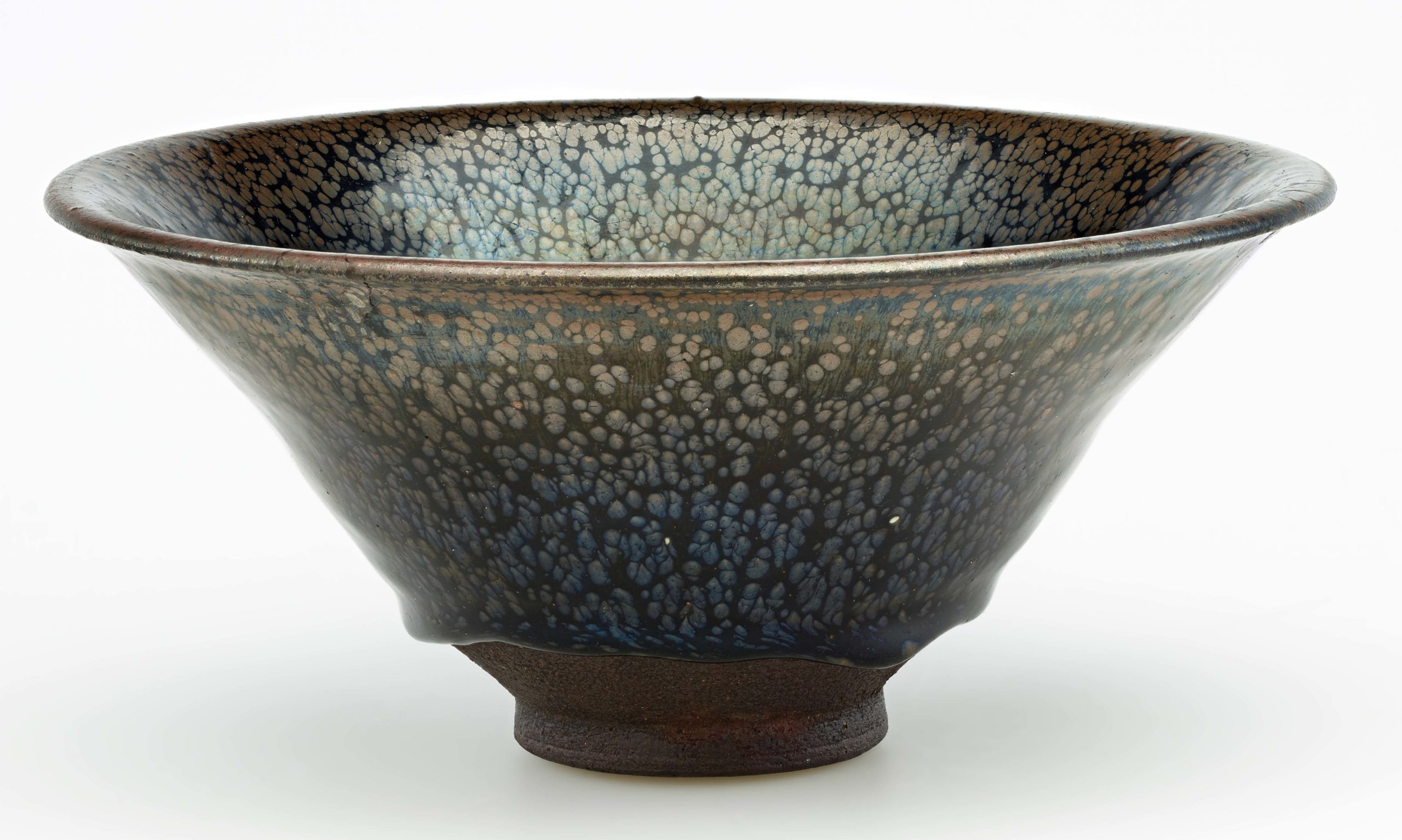
Bowl, Northern Song or Southern Song dynasty, 12th century, Jian ware, Stoneware with fe-pigmented glaze, China, Fujian province, 8.8 ten nineteen.2 cm (Freer Gallery of Fine art, Smithsonian Establishment, Washington, DC: Gift of Charles Lang Freer, F1909.369)
The visual arts reveal how moments of chaos and peace both shaped Red china's long history of dynasties ruled by emperors (known every bit the imperial era, spanning 221 B.C.E. to 1912) and gave rise to one of the most remarkable chapters in the history of Chinese art. Paintings, sculpture, architecture, and ceramics expose this moment of upheaval (during the V Dynasties and Ten Kingdoms menstruum) and eventual reunification (during the Song Dynasty), demonstrating an extraordinary quest for harmony in social club and peace for the nation.
The Five Dynasties and Ten Kingdoms Period
If China's earlier Tang dynasty was a golden historic period of arts and culture, then the tenth century began equally a stark contrast—frequent incursions by tribes from the due north and warlord-controlled kingdoms divided Prc into Five Dynasties and X Kingdoms (907–960).
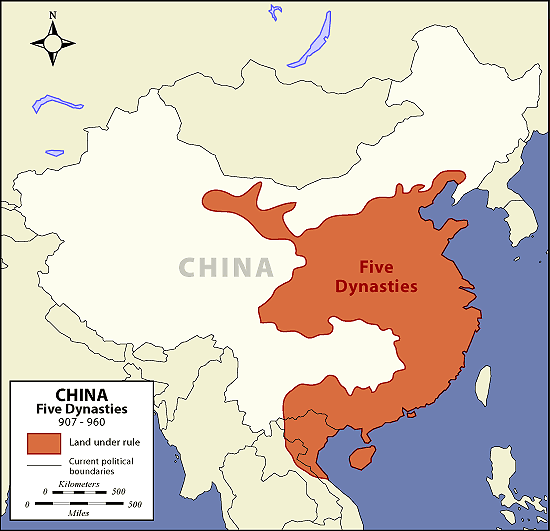
Map of the V Dynasties and X Kingdoms (Minneapolis Institute of Fine art)
Ane of these dynasties, the Liao dynasty (907–1125), expanded their territory to the n and claimed lands formerly possessed by the Tang empire. This dynasty was indigenous-Khitan (singled-out from the Han Chinese). The Liao maintained relations with the Korean peninsula (one important betoken of cultural exchange) while seeking to emulate their predecessors, the Tang dynasty. The Buddhist sculptures, murals, and architecture of the Liao empire reveal widespread cultural contacts that flourished along the Silk Roads. The Liao, and after the Jurchens and the Mongols, remained an always-present threat to the s, where several dynasties and kingdoms jockeyed to reunify the empire.
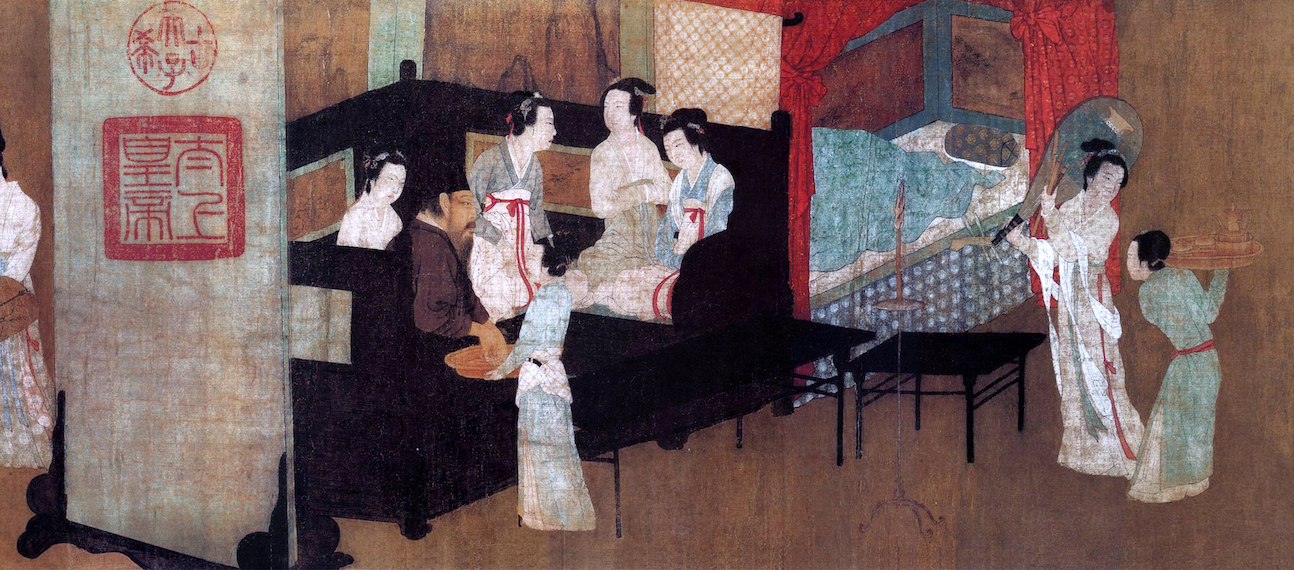
Gu Hongzhong, particular of Han on a burrow with guests (left) and a rumpled bed (right), The Night Revels of Han Xizai, handscroll, 12th-century (Song dynasty) copy of a 10th-century (Southern Tang dynasty) composition), ink and color on silk, 28.7 x 335.5 cm (The Palace Museum, Beijing)
Other artists of the 5 Dynasties and Ten Kingdoms took an interest in matters of morality and integrity, which were viewed every bit essential for good governance in Confucian thought. Paintings oft probed the boundaries of official decorum and social relations by picturing loyal subjects, virtuous officials, mannerly courtesans, and wayward ministers (such as in Gu Hongzhong'southward Night Revels )—archetypes that may accept served every bit an admonition to right undesirable conduct, or to narrate a harmonious society nether the benevolent rule of the emperor.
Read more than virtually tombs, painting, and sculpture of the Five Dynasties and Ten Kingdoms Menses
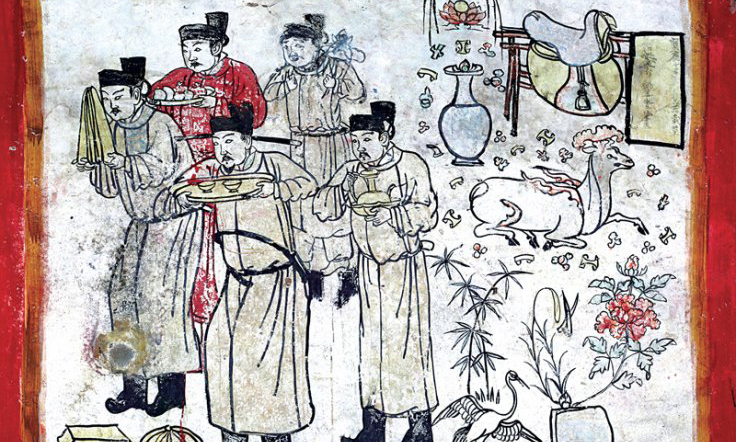
Murals in two Liao Dynasty tombs: Representations of exquisite objects and human servants in Liao dynasty tombs are abundant.
Read At present
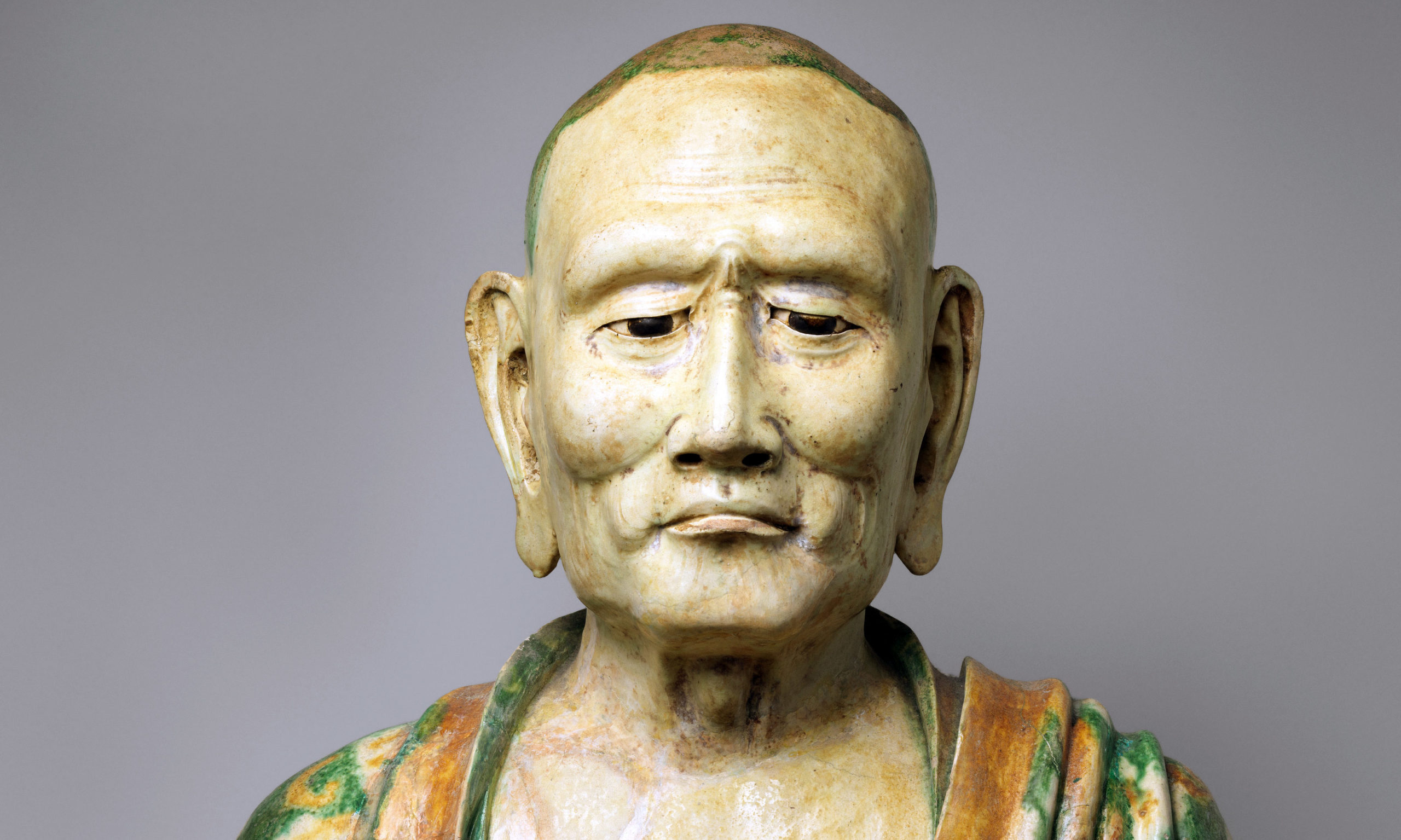
Arhat (Luohan): This Buddhist Monk statue defies traditional depictions of religious figures.
Read Now
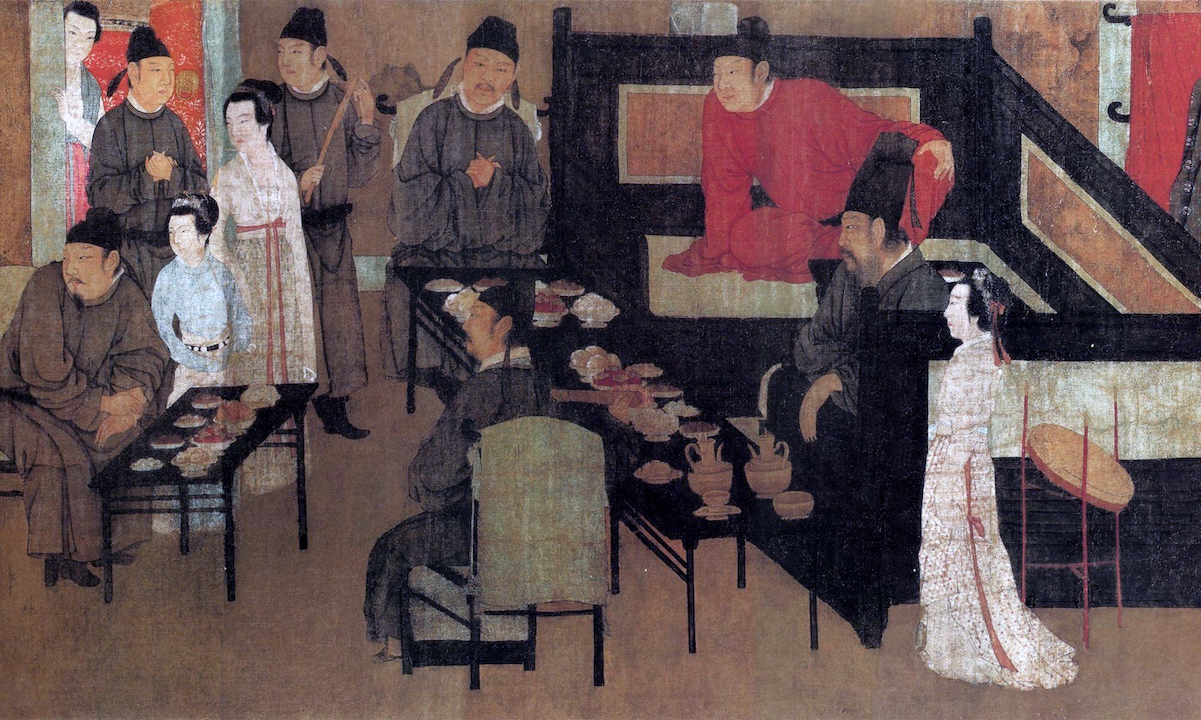
Gu Hongzhong, The Dark Revels of Han Xizai: This handscroll offers an intriguing portrayal of a court minister testing the bounds of Confucian propriety during the Five Dynasties.
Read Now
/3 Completed
The Song Dynasty
It was not until the Song dynasty (960–1279) that power over again coalesced into a single empire, commencement in the north (the Northern Song dynasty, 960–1127) and and then in the south (the Southern Vocal dynasty, 1127–1279).
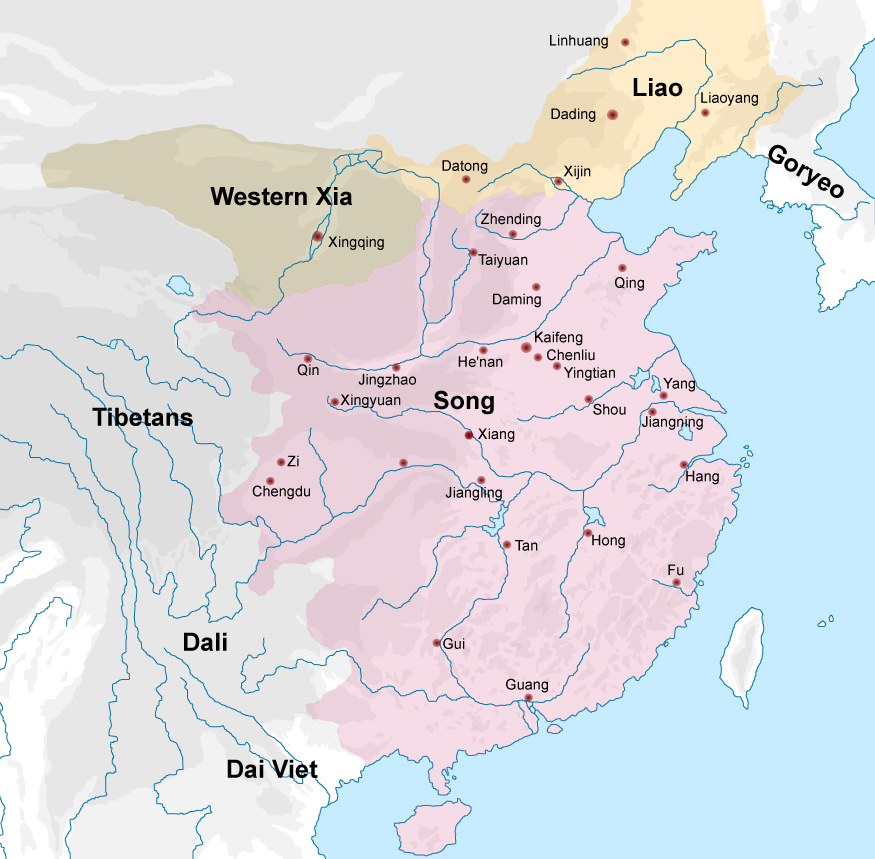
The Song dynasty at its greatest extent in 1111 (map: Kanguole, CC By-SA 3.0)
Although the Vocal dynasty lacked the vast territory of the Tang dynasty, both art and commerce flourished with the support of the Song court. One Song emperor established an Imperial Painting University, recruiting artists from around the empire to fulfill imperial commissions and collecting celebrated works. In addition, court officials meticulously documented each painting in the imperial collection, thereby creating a framework for the study of Chinese paintings that scholars still consult today. When the courtroom relocated from the northern urban center of Bianjing (now Kaifeng) to the southeastern city of Hangzhou due to the advance of the Jurchens, artists continued to explore the human relationship between homo and nature in both pictures and verse.
Read an introductory essay
Song dynasty (960–1279): an introduction.
Read Now
/1 Completed
Urban Life and Society in the Song Dynasty
Reunification under the Northern Vocal dynasty (960–1127) ushered in paintings that nowadays urban life and commerce in vibrant detail. Artists took a close await at all subjects, from the minute to the k, from the built to the natural world. A technique called ruled-line painting ( jièhùa 界畫, or cartoon aided with line-brush, ruler, and compass) grew popular in the Northern Song as a way for depicting architecture with incredible precision, using measurements and rules that were applied to palaces, gardens, and other man-made objects such every bit boats and chariots. By precisely rendering the architecture of daily life, artists conveyed a sense of truth—a vision that suggested the prosperity that comes with peace—a welcoming sight after several decades of turmoil during the Five Dynasties period.
Read about Northern Song depictions of urban life
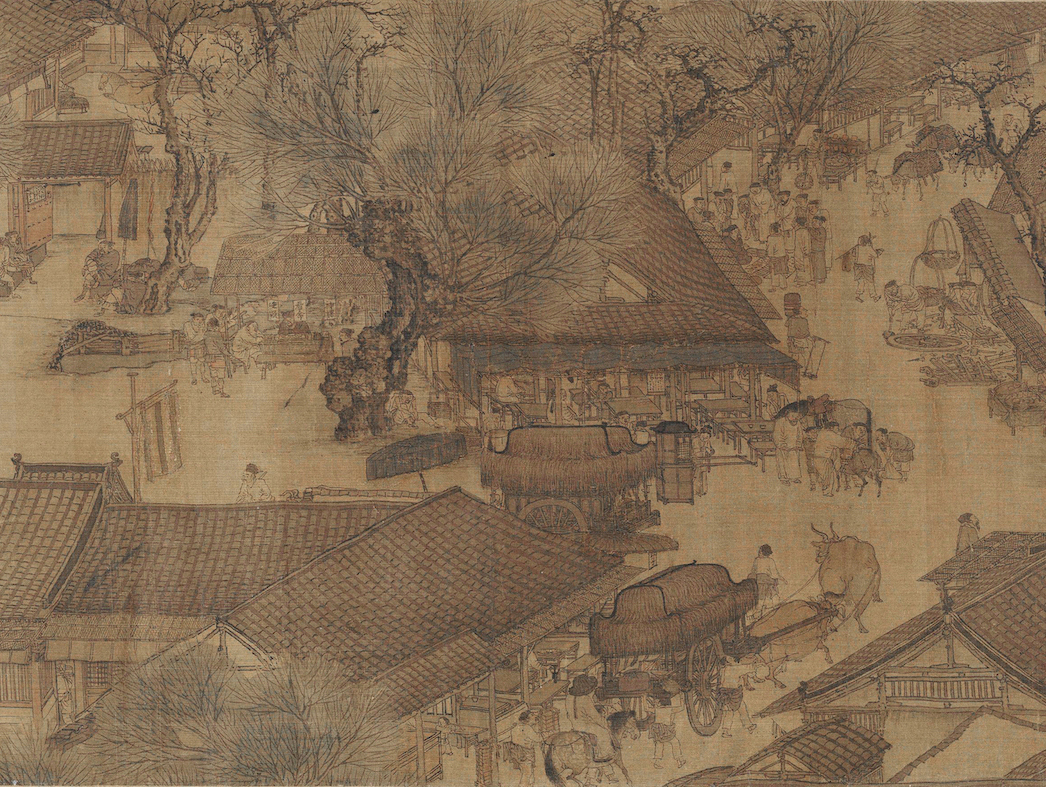
Attributed to Zhang Zeduan, Forth the River during Qingming Festival: This handscroll offers a rare glimpse of the thriving commercial activity of medieval Communist china.
Read Now
/one Completed
Awe-inspiring Landscape Painting
Perhaps most iconic of the paintings from the Five Dynasties and Ten Kingdoms period through the Northern Song dynasty are the thou views of nature known as "awe-inspiring mural paintings," which coagulate every bit a genre at this fourth dimension and explore the balance between nature and humanity. Whether the rugged, mountainous topography of the north or the low-lying waterways of the due south, monumental landscape paintings capture the essence of nature in lavish detail.
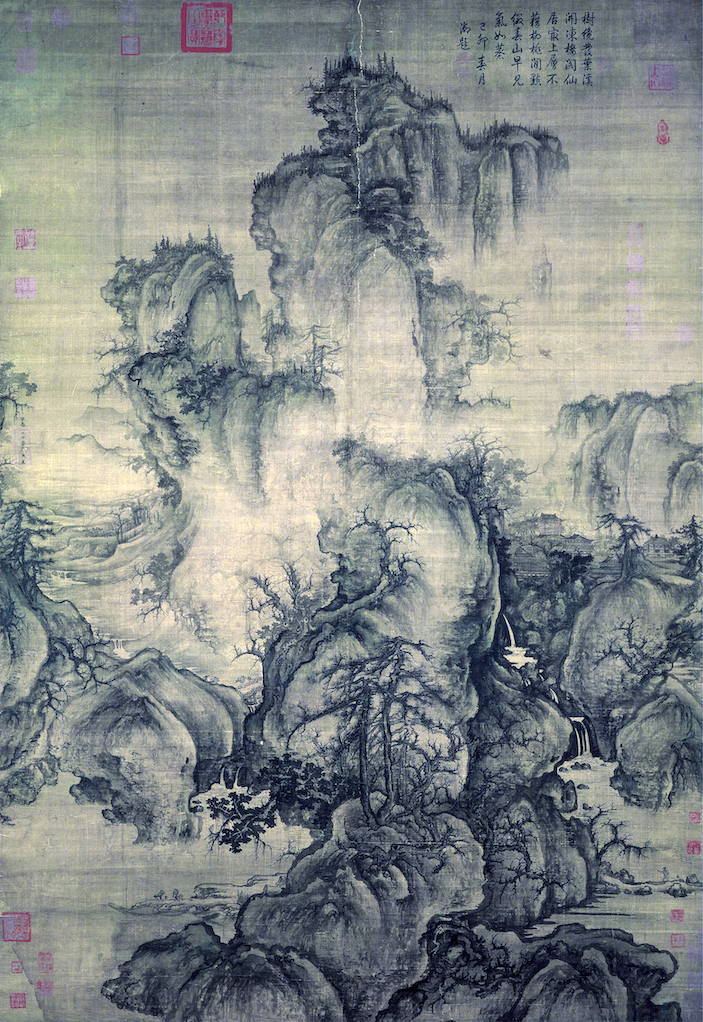
Guo Xi, Early on Spring, signed and dated 1072, hanging whorl, ink and color on silk 158.3 x 108.1 (National Palace Museum, Taipei)
Each work is like a journey of the senses, as one'due south middle travels over dusty trails, past misty waterfalls to cliffside temples. Artists constitute piddling need for colour, instead relying on their treatment of the brush and ink by using contour lines for modeling, brushwork variations for texture, and ink washes for atmospheric effects, all on the unforgiving medium of silk (the slightest touch on of ink and water volition set permanently on this highly absorbent, poly peptide-based fabric). Few figures appear in the landscapes, which exude a sense of vitality and otherworldliness—humanity equally 1 small part of the living, breathing entity of nature.
Images of nature in harmony could represent a metaphor for peace and unity among people. In "A Note on the Fine art of the Castor," the Five Dynasties painter and theorist Jing Hao (c. 855–915), described landscape paintings in terms of both Daoist and Neo-Confucian principles, explaining how visions of nature could give class to ideal qualities in land and club. Typically mounted equally hanging scrolls, patrons displayed these large-scale works on walls of mansions or palaces to communicate a vision of harmony between man and nature, or the emperor and his subjects.
Read virtually awe-inspiring landscape painting
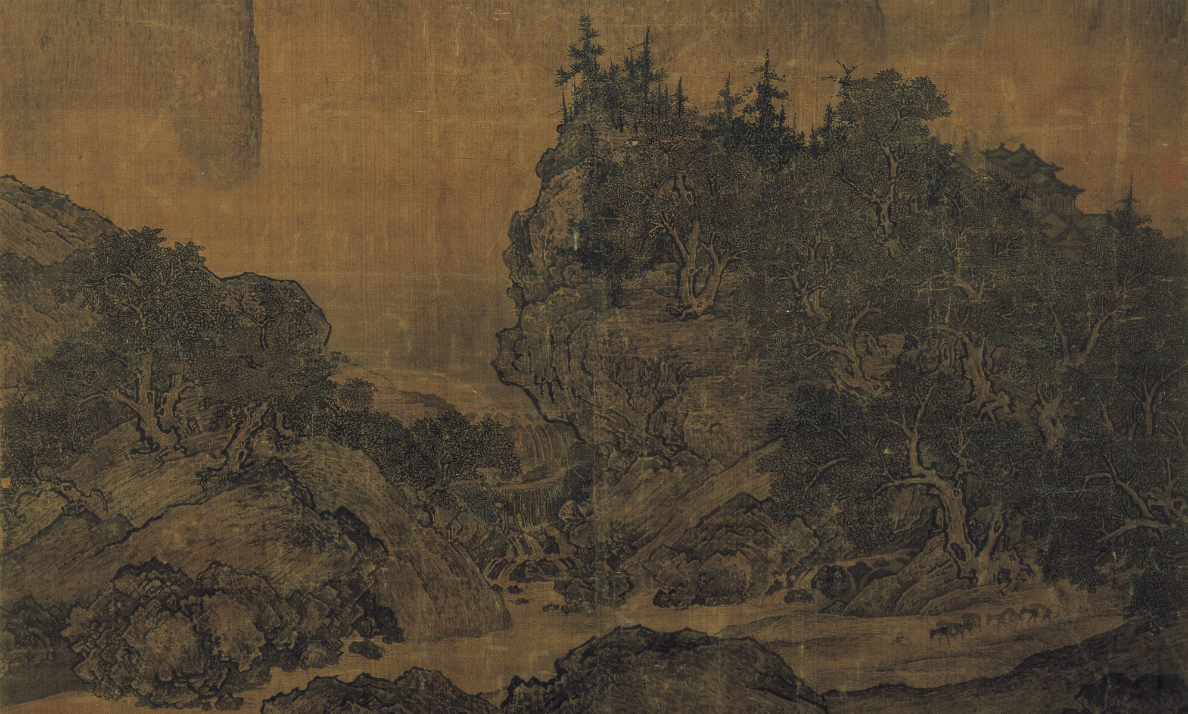
Fan Kuan, Travelers past Streams and Mountains : This monumental mural is the most majestic case of early on Song "mount h2o" painting.
Read Now
/one Completed
Poetic Imagery
The notion of the "Three Perfections," or the harmony of painting, poetry, and calligraphy emerged during the Song dynasty. Calligraphy, through its attending to brush and line, was the courage of painting, which was inspired by poetry. All 3 split forms could be nowadays in a painting, whether literally or metaphorically. In other words, the words of a poem could shed light on the possible meanings and nuances of the pic, and vice versa. Often painted on the minor format of the album leaf, pictures would normally accompany a verse form either directly on the painting or facing it. When preparing a painting to offer as a souvenir for a retirement or matrimony, for example, court artists might select an prototype such as a bird or flower that could serve as a symbol of nobility or love. A poem would further activate the significant of the message, thereby serving equally a good omen or wish for the recipient.
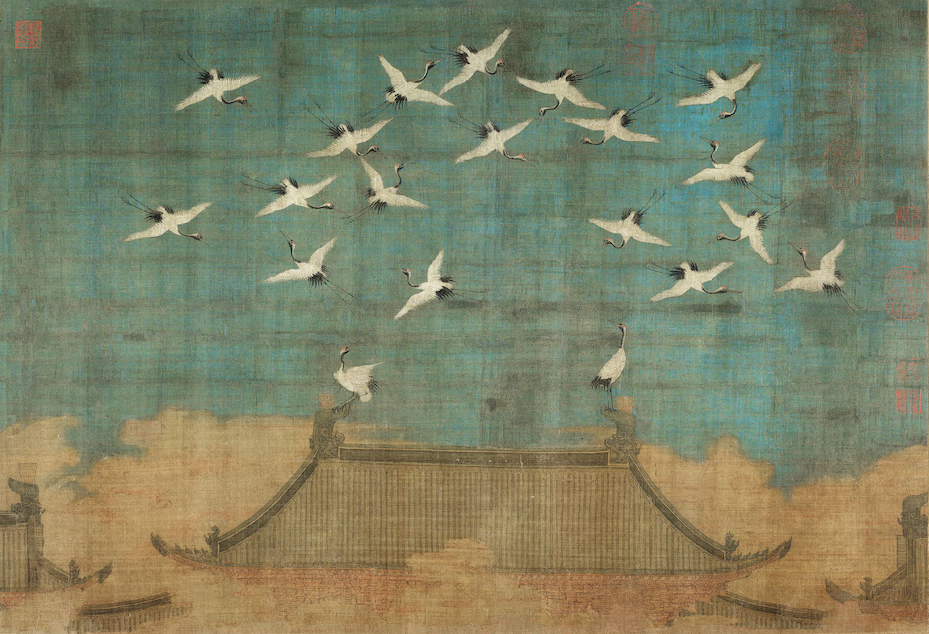
Emperor Huizong, Cheering Cranes, handscroll, ink and color on silk, 1112.51 ten 138.2 cm (Liaoning Provincial Museum, Shenyang)
University artists also drew on the relationship between words and pictures to convey auspicious meanings (signs of good fortune). They drew on the aesthetic principles of Northern Song Emperor Huizong, who emphasized close observation and accurate portrayal of the subject. Simply as a spring landscape could human action as a metaphor for harmony and peace in the land, auspicious omens also could exist found in natural subjects and events, such as a multi-headed grain stem or a flock of cranes descending over the capital that could be a metaphor for good governance. With great attention to the subjects' form, court artists employed calligraphy, poetry, and painting to tape such remarkable acts of nature that could too assert the "Mandate of Sky," or tīanmìng 天命 , the emperor'southward heavenly right to dominion.
Read about poetic imagery
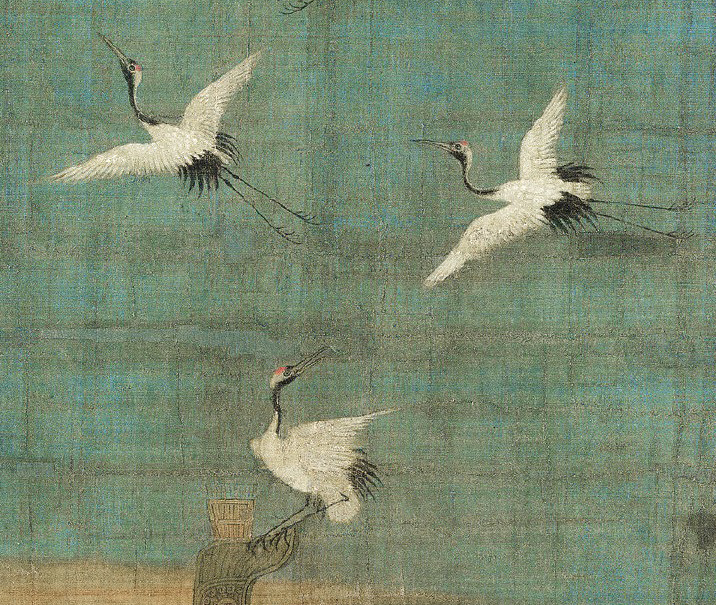
Emperor Huizong, Auspicious Cranes: This handscroll records natural phenomena that would be interpreted as a good omen for the dynasty.
Read At present
/ane Completed
Buddhist Patronage
Court artists of the Southern Song dynasty further developed evocative images with attending to Chan Buddhism. The Chan aesthetic, referred to as Zen in Nippon and Son in Korea, favors a spontaneous arroyo that reflects the suddenness of enlightenment sought by Chan devotees—dissimilar the study of Buddhist scriptures and devotional practices. The values of unadorned simplicity, artlessness, and purity characterize Chan-inspired artworks throughout Eastward Asia; works that share a feeling for unforced naturalness and deep respect for nature. Hangzhou, the site of several important Chan monasteries, became a centre for the transmission of Chan throughout the region, in particular to Japan.
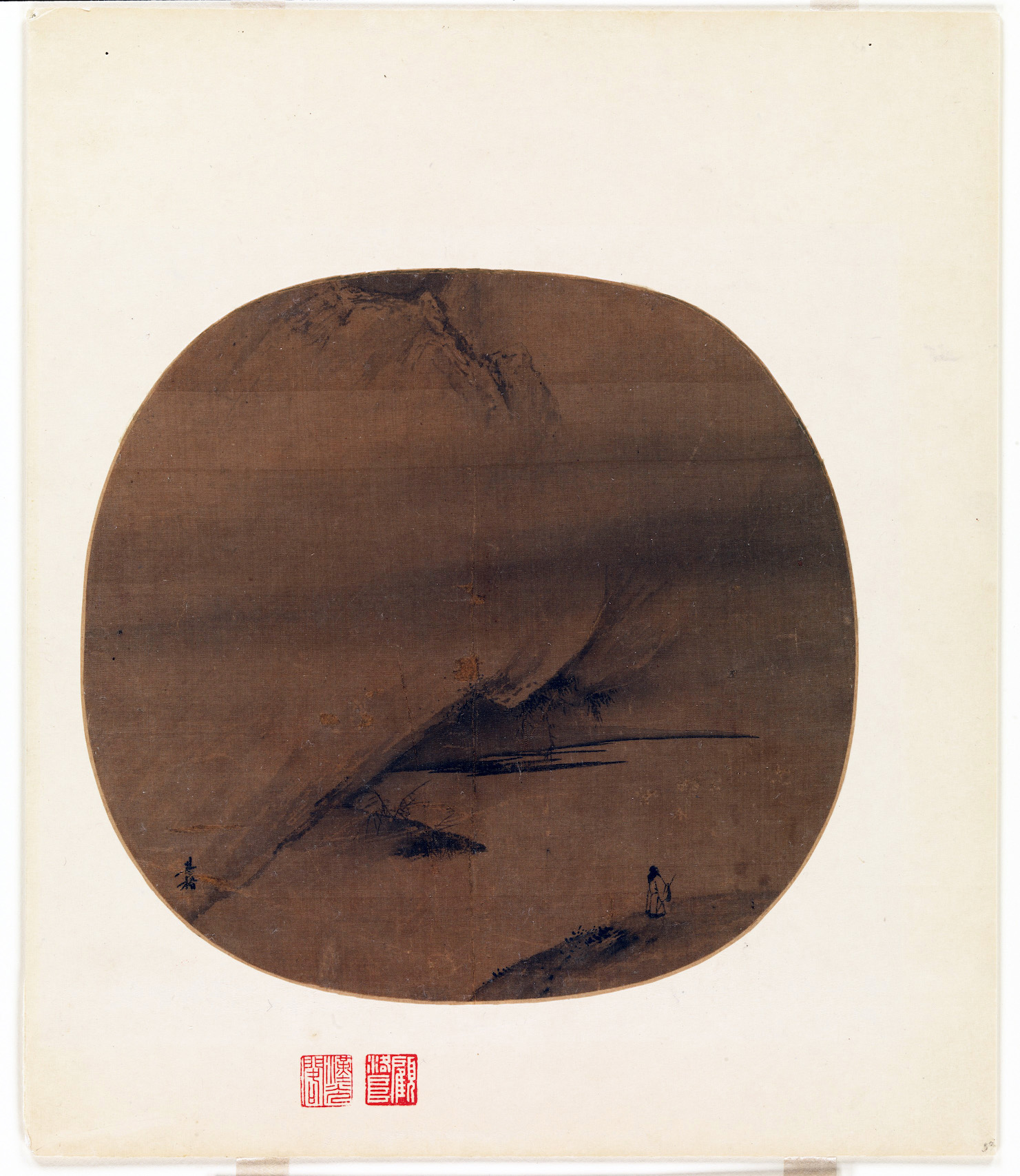
Liang Kai, Poet strolling past a marshy bank, early 13th century, Southern Song dynasty, fan mounted as an album leafage; ink on silk, 22.9 x 24.3 cm, Communist china (The Metropolitan Museum of Art)
Southern Song artists were not but inspired by Chan Buddhism, but also by lyrical poetry that follows a particular meter intended to be sung aloud. Paintings often display the neat fitting of elements into pocket-size spaces, like architecture or rocks, to suggest a coherence of space in an asymmetrical composition. Such organization of forms into a "one-corner composition" suited smaller pictorial formats, such equally the album foliage or fan, and lent space for a poem or poetic couplet to be added past a skilled calligrapher or fifty-fifty the emperor or empress.
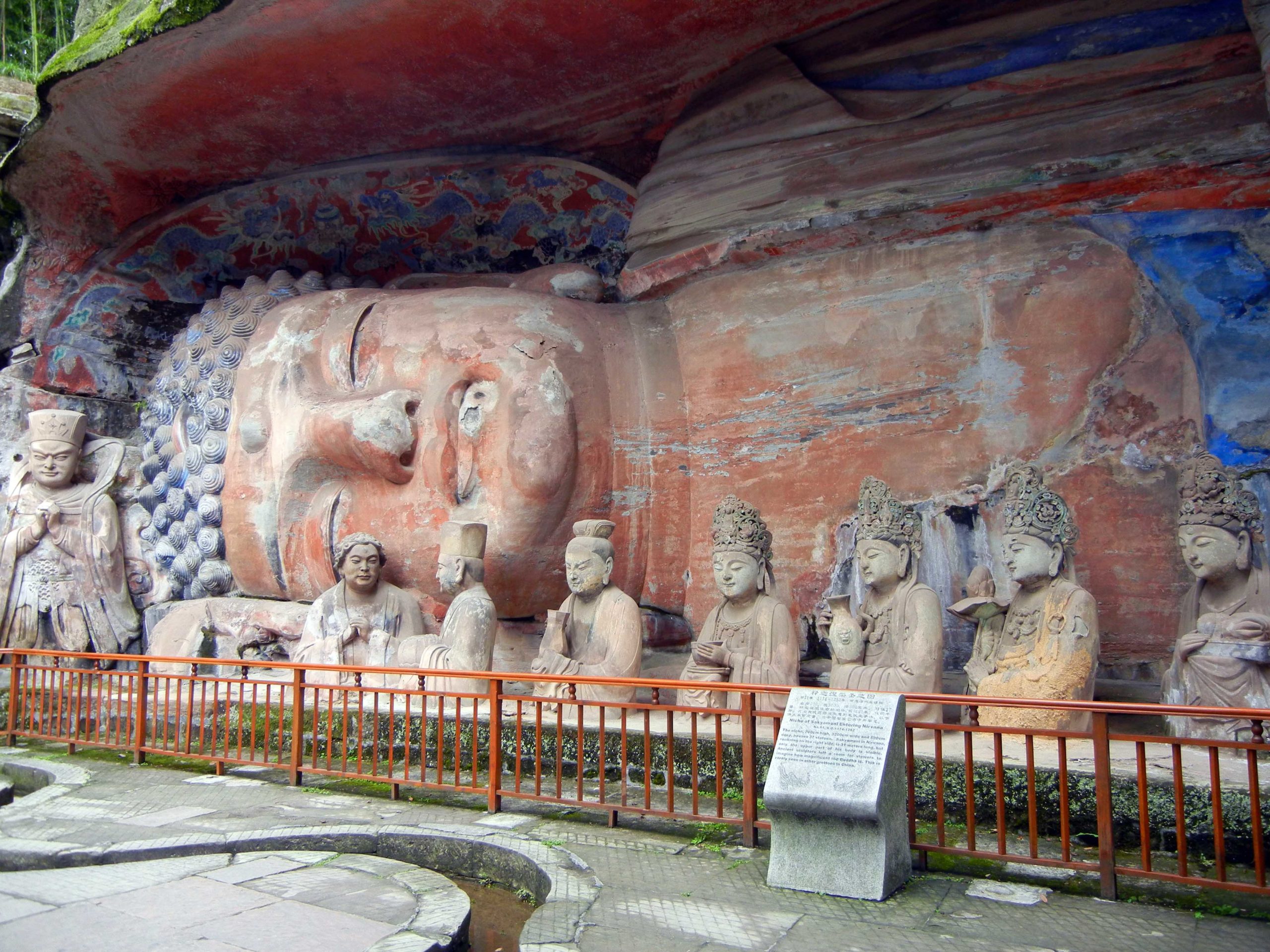
Particular of reclining Buddha, Parinirvana (the death of Shakyamuni attended past bodhisattvas), Mt. Baoding, Dazu. Southern Song Dynasty. 102′ long (photo: Mulligan Stu, CC By 2.0)
The Southern Song Emperor Xiaozong famously wrote that one should apply "Buddhism to cultivate one'southward mind, Daoism to nurture 1's trunk, and Confucianism to govern the world." Every bit the arts of this era reveal, Buddhism did non be in isolation; Daoism and Neo-Confucianism complemented the arts of Buddhism by farther affirming the court's bulletin of cultural unity. Moreover, dissimilar Buddhist sects each offered unique visual approaches to enlightenment as seen in temple architecture, sculpture, and painting. Patrons varied widely, besides, with both court and lay patronage establishing rich repositories of Buddhist architecture, sculpture, devotional painting, and material culture throughout the empire.
Read essays and scout videos most Buddhist patronage
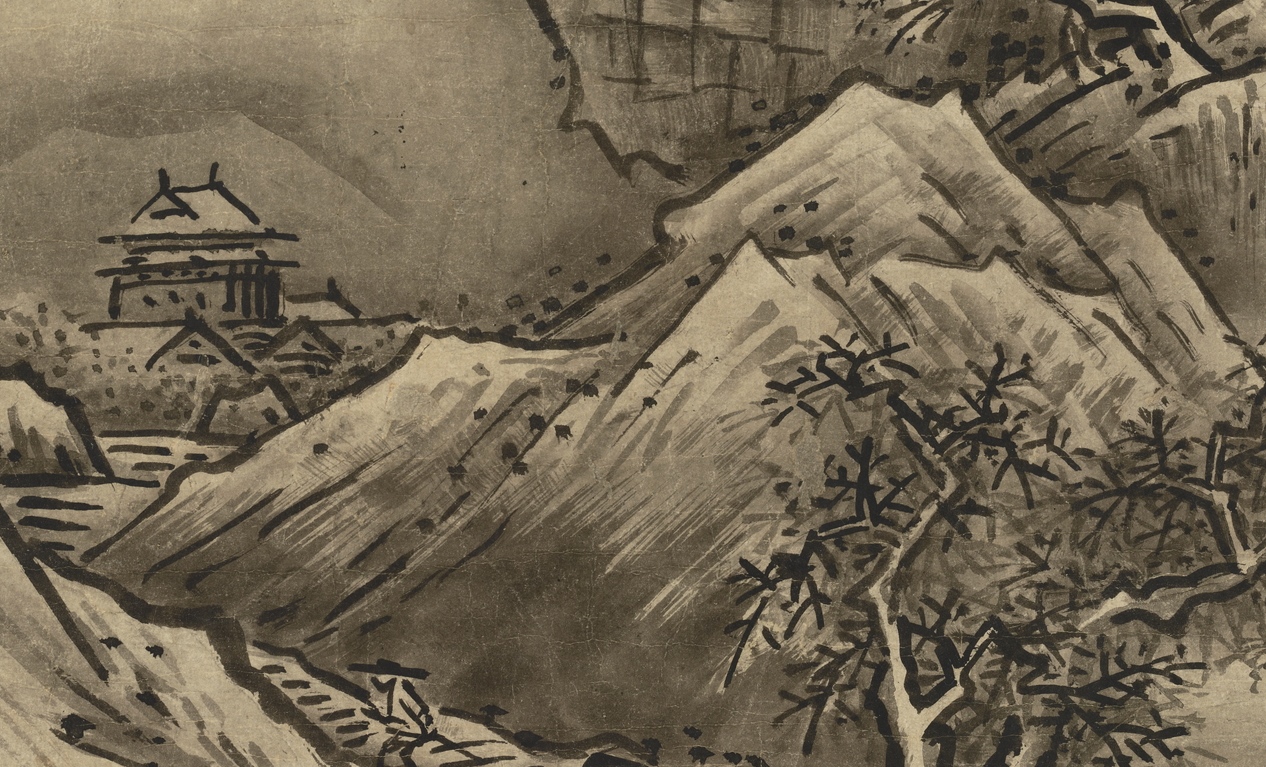
Sesshu Toyo,Winter Landscape: A Japanese Zen painting helps to sympathise Chan Buddhism in China.
Read Now
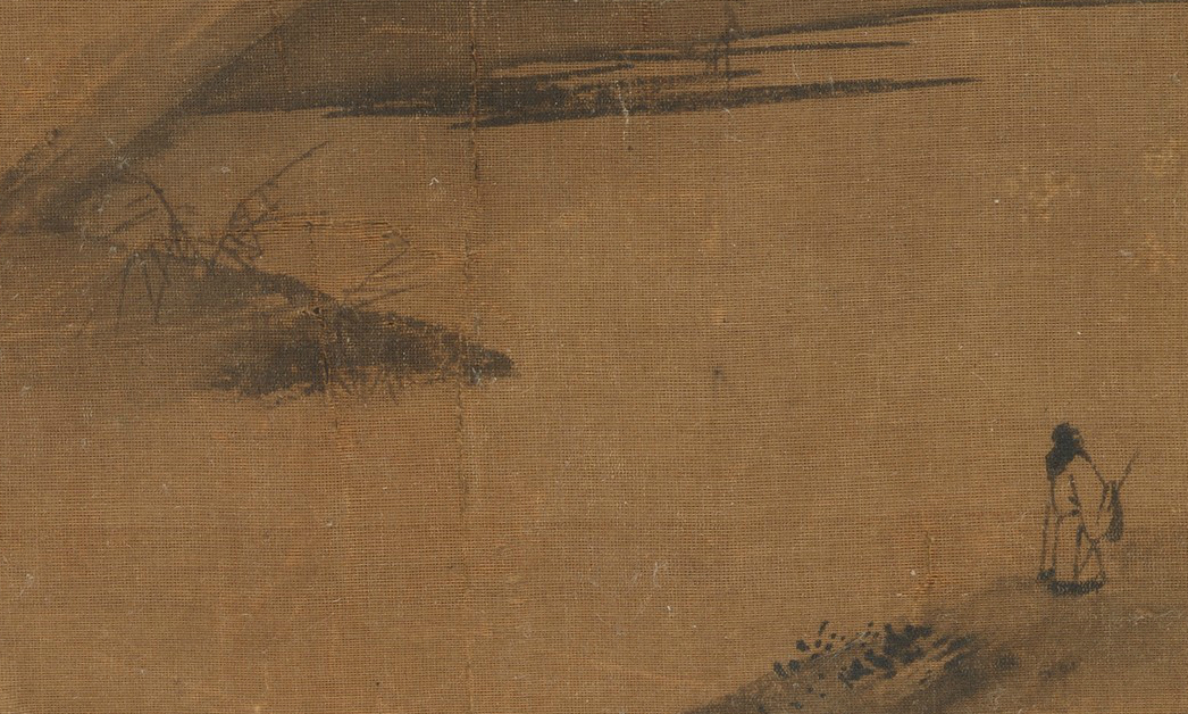
Liang Kai, Poet Strolling by a Marshy Banking concern: How an artist paints with a metaphor.
Read Now
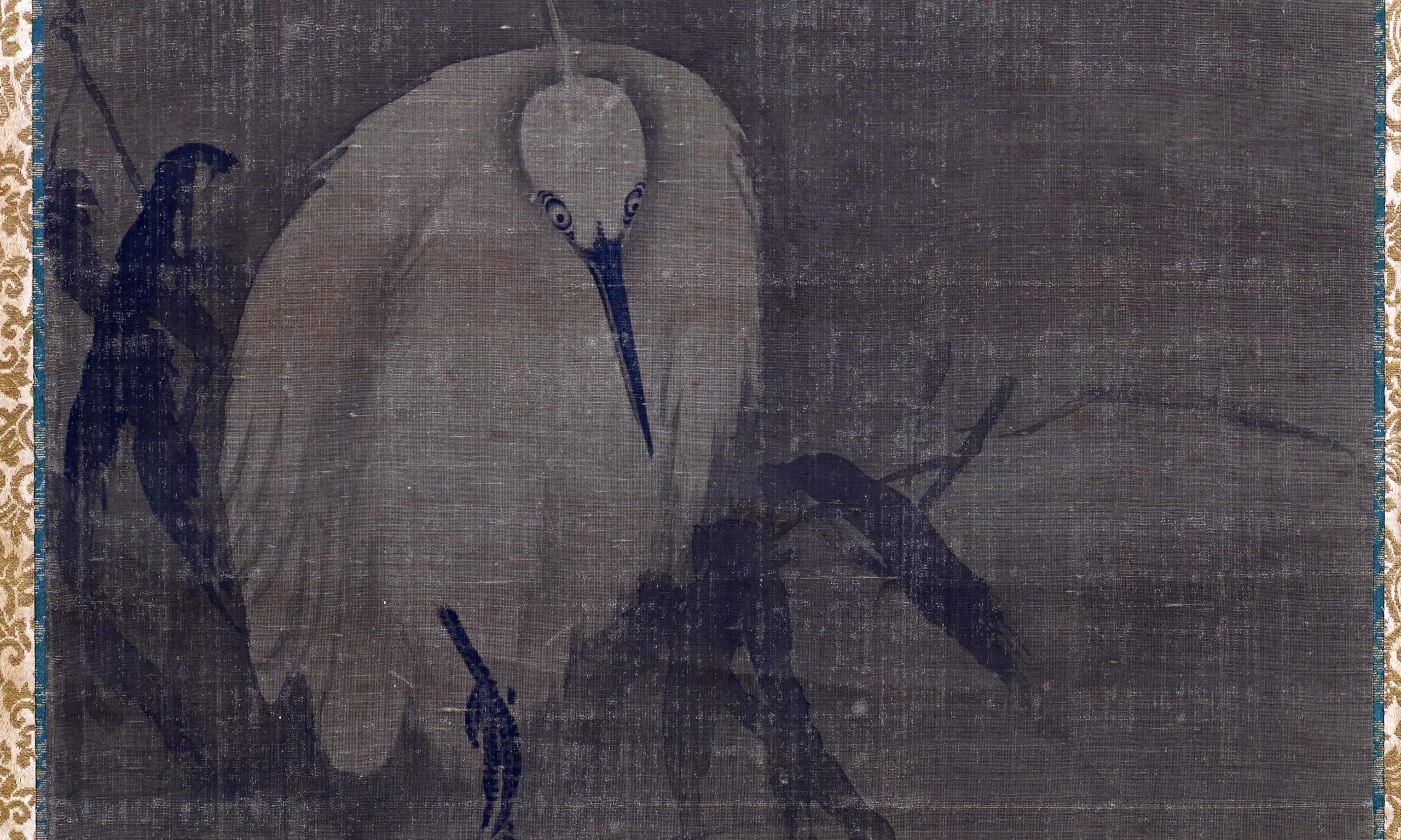
Liang Kai (attributed), White Egret: An egret helps to convey spiritual intensity.
Read Now
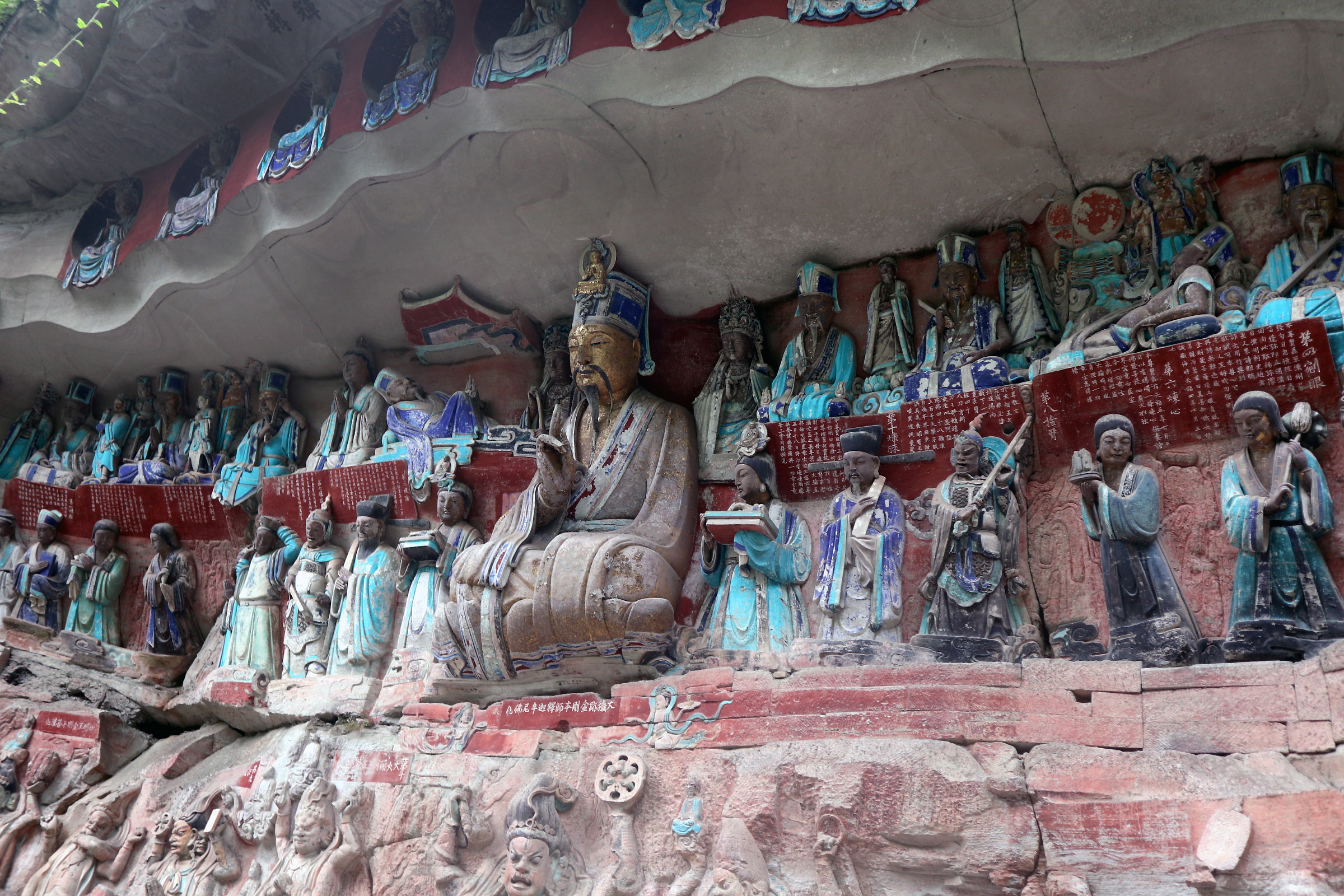
Mt. Baoding, Dazu rock carvings: The awe-inspiring sculptural complex at Mt. Baoding consists of nigh 10,000 painted and gold images of Buddhist deities and narrative scenes carved out of sandstone.
Read At present
/4 Completed
Ceramic Product
The Song dynasties amassed the resources and organization for a thriving ceramics production, both for domestic consumption and export abroad. Song wares are known for the diversity of their shapes, glazes, and decorative programs. Examples range from the elaborate, incised motifs seen on the ivory-hued wares of the Northern Vocal dynasty, to thick applications of crackled, green-blueish glazes on the celadons of Southern Song official ware, or gūanyáo 官窯, that resembled the color of jade or tender spring plants.
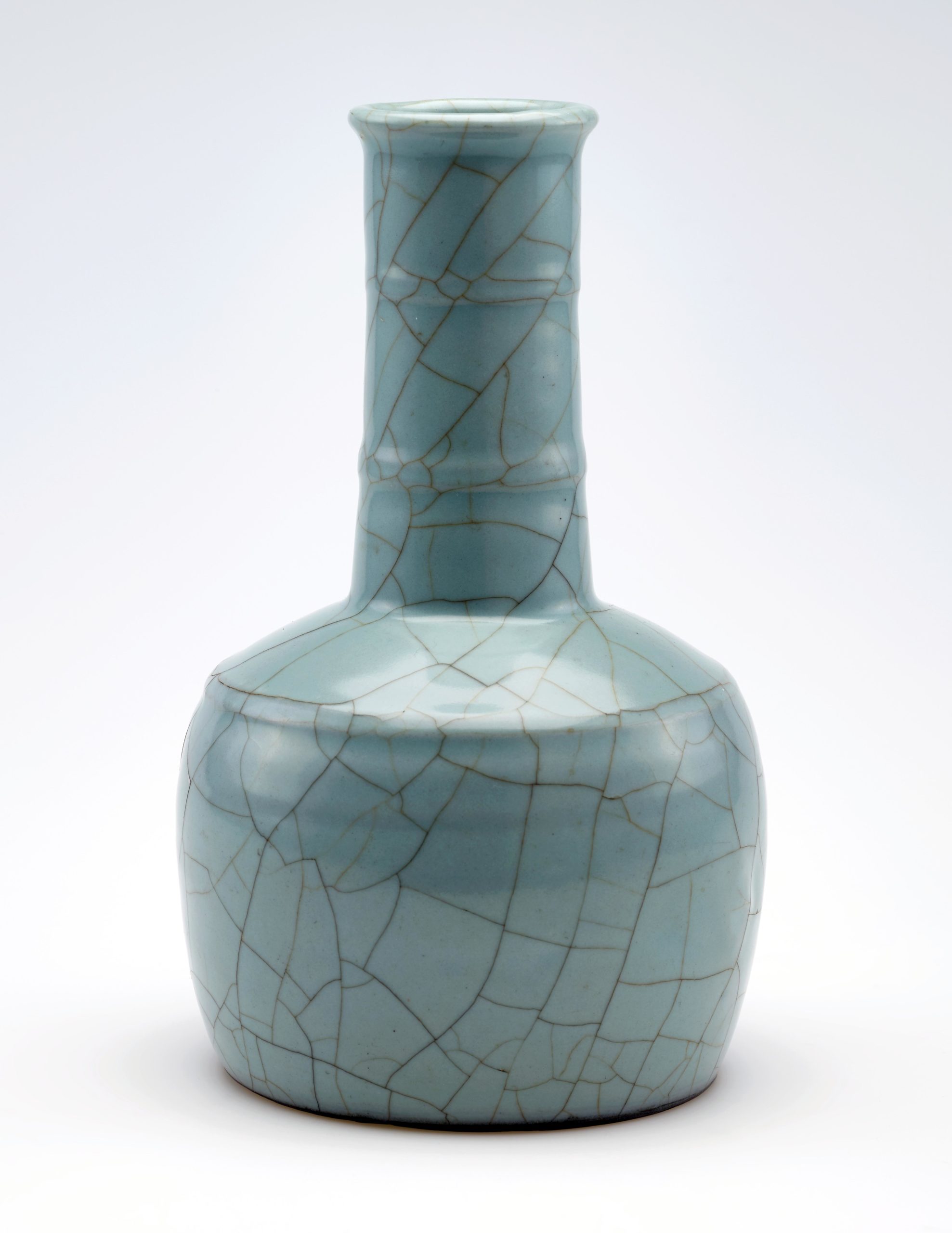
Guan ware long-necked vase with raised bow-string ornamentation, Southern Song dynasty, 12th century, Guan ware, stoneware with Guan glaze, Communist china, Zhejiang Province, Hangzhou, Jiaotanxia kiln, 23.2 x xiv.one cm (Freer Gallery of Art, Smithsonian Institution, Washington, DC: Gift of Charles Lang Freer, F1911.338)
The social uses of each ware differed widely, as well. While the Southern Song court oversaw the production of official wares at the imperial kilns near the uppercase, common or popular wares, such as Jian ware, circulated broadly. Some served as imperial tribute, while others functioned every bit tea wares in Buddhist monasteries. Tea drinking became an of import social activity also equally religious practice, and it served as an important bridge between monks and laypeople.
As a portable art course, ceramics besides traveled every bit gifts betwixt cultures. A Chinese envoy to Korea, Xu Jing, who visited the capital in Gaeseong in 1123, noted the resemblance between ceramics from Korea and Song celadons. He saw a witting emulation of certain stylistic features of Chinese wares, such as the shapes of vessels and standard decorative motifs. In the decades that followed, Korea produced its ain celadons and so remarkable that they were offered in tribute to the Mongol Yuan dynasty (1271–1368)—a compelling example of how cross-cultural exchange within Asia generated further innovation and apportionment.
Essays and videos about ceramic production
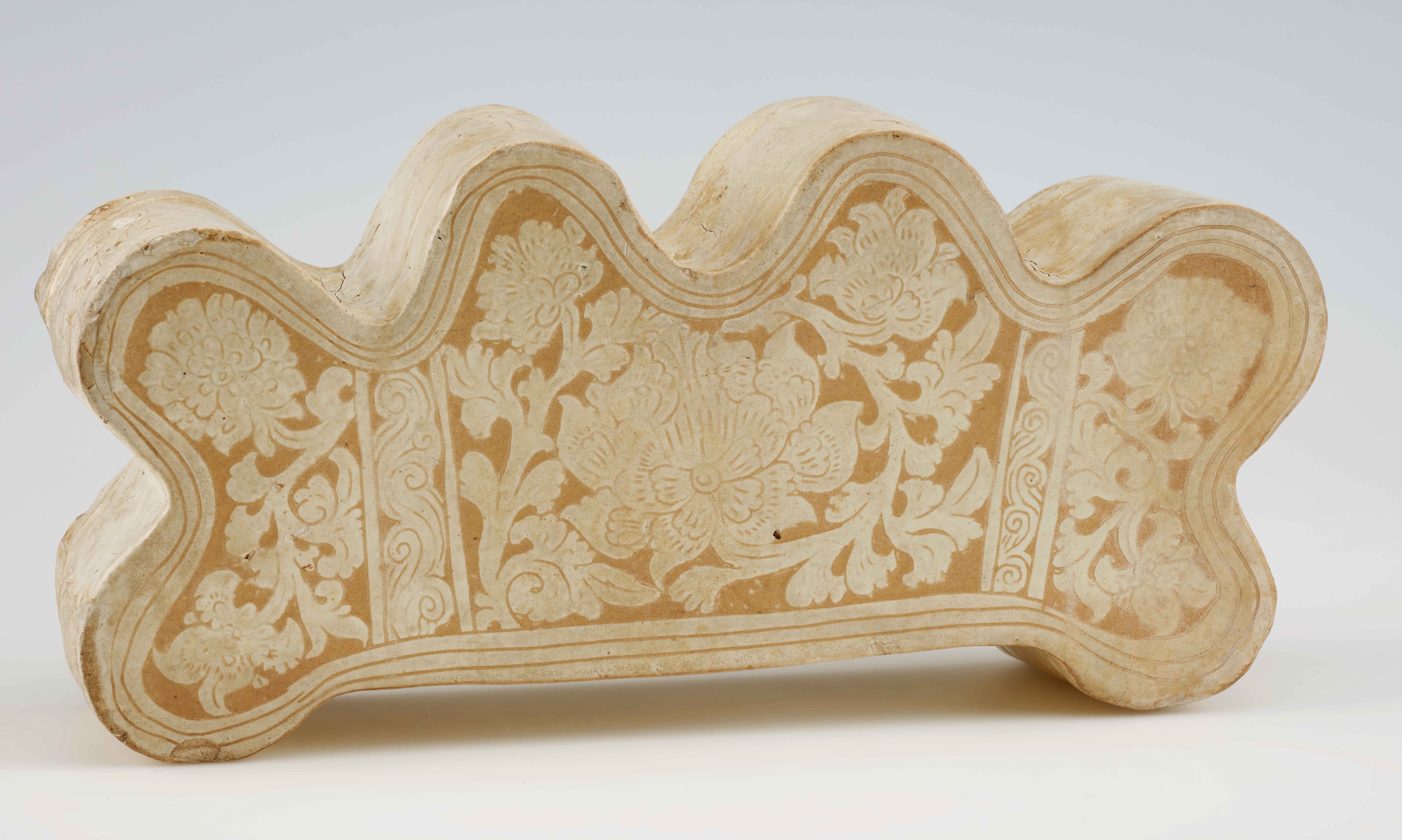
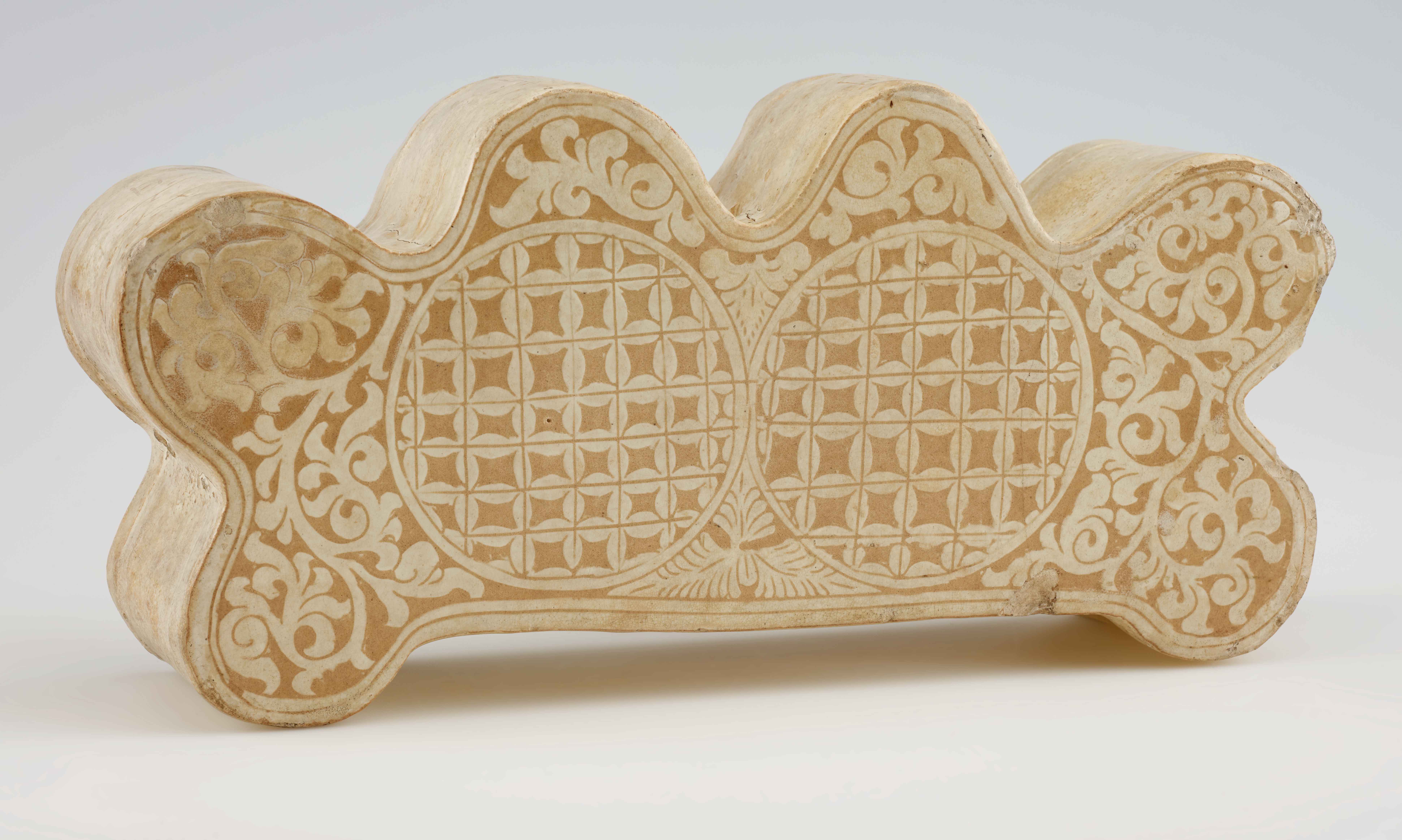
Ceramic pillows: They became a pop domestic item amid middle- and upper-class families during the Song dynasty.
Read At present
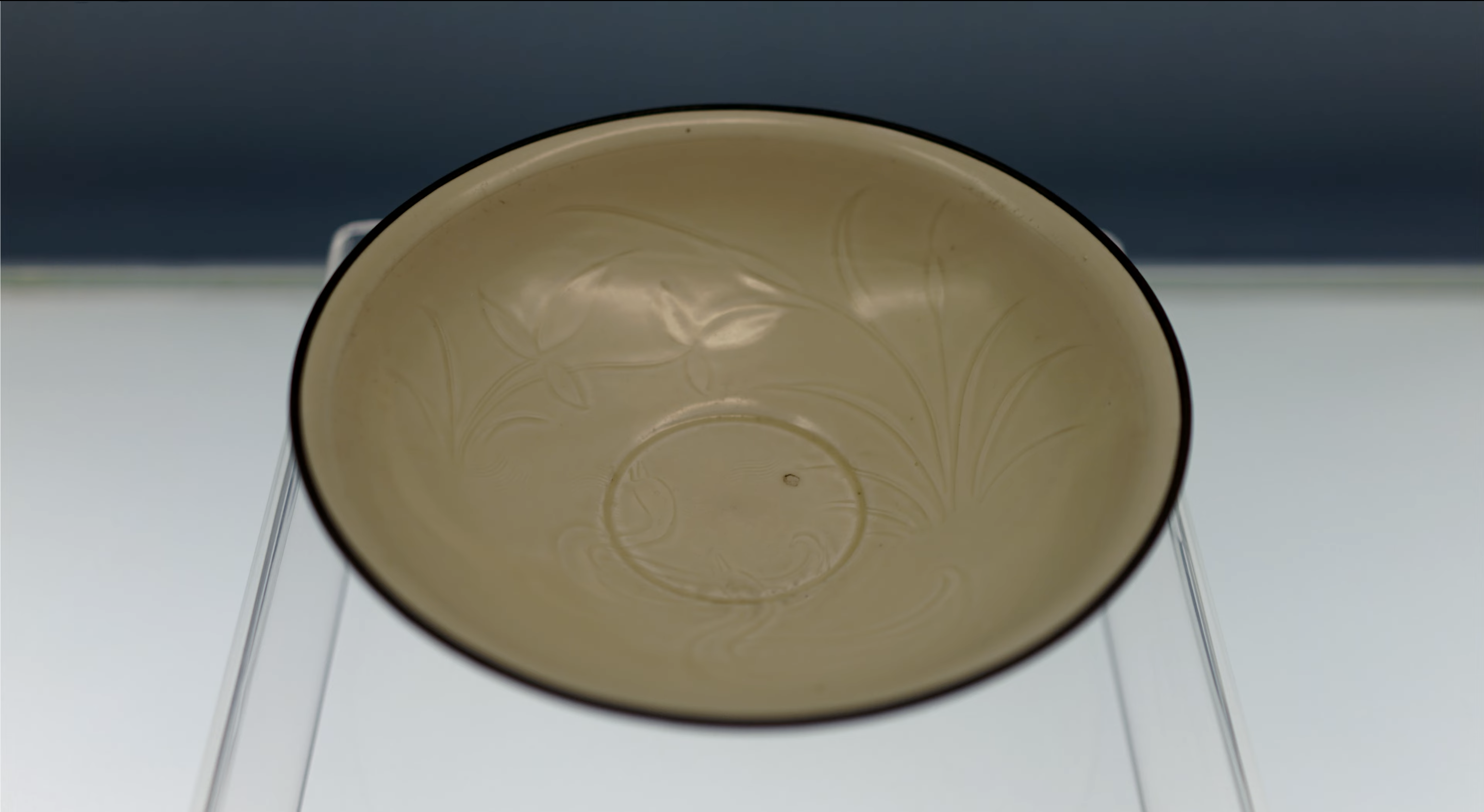
Ding ware bowl: The refined aesthetic of the Northern Song dynasty.
Read Now
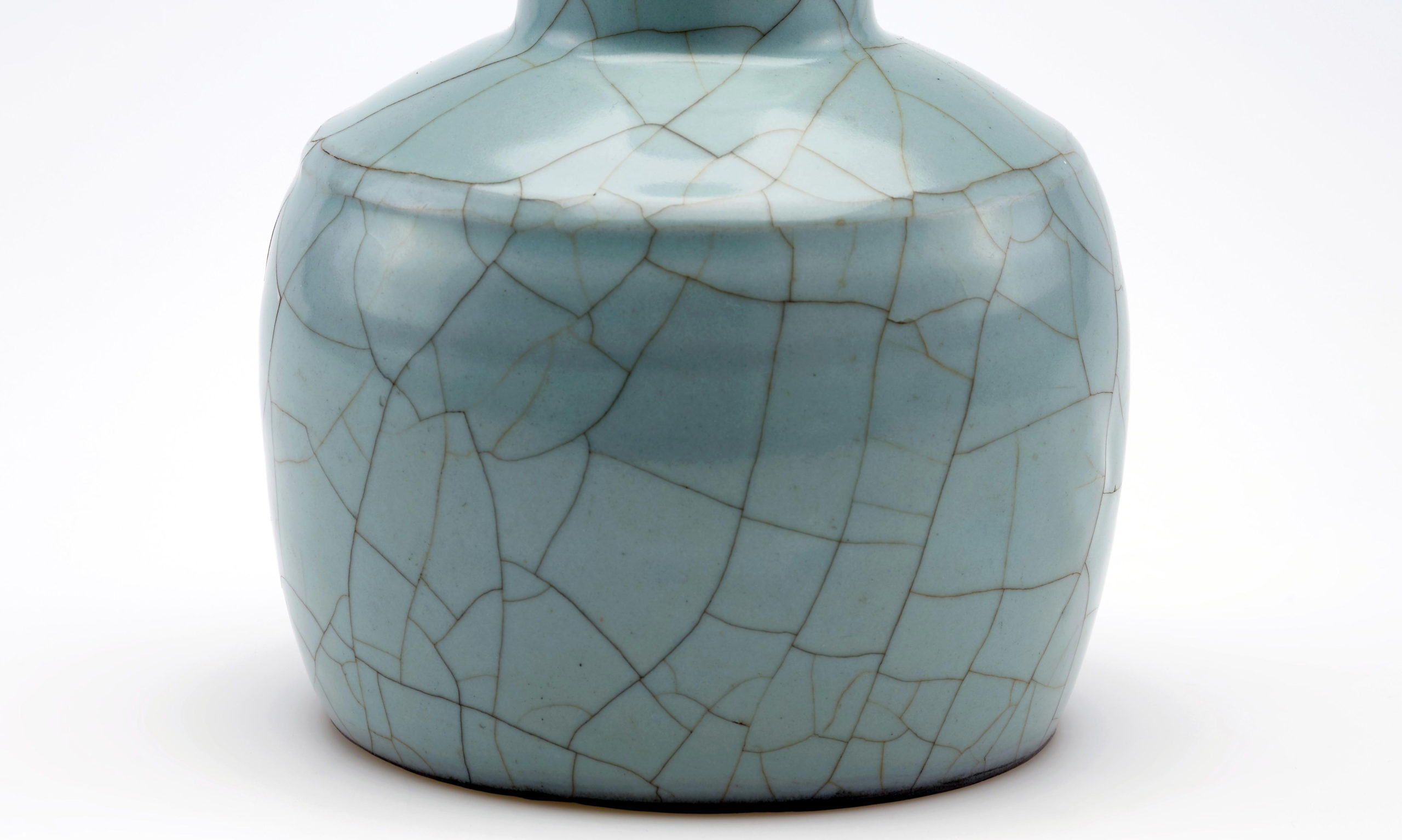
Long-necked vase: Guan ware is probably one of the rarest and nearly admired types of Chinese ceramics in the present world.
Read Now
Basin with "oil spot" glaze: Jian ware tea bowls were highly prized in China but seem to take gone out of fashion at that place, whereas the Japanese adopted them for use in tea ceremonies.
Read Now
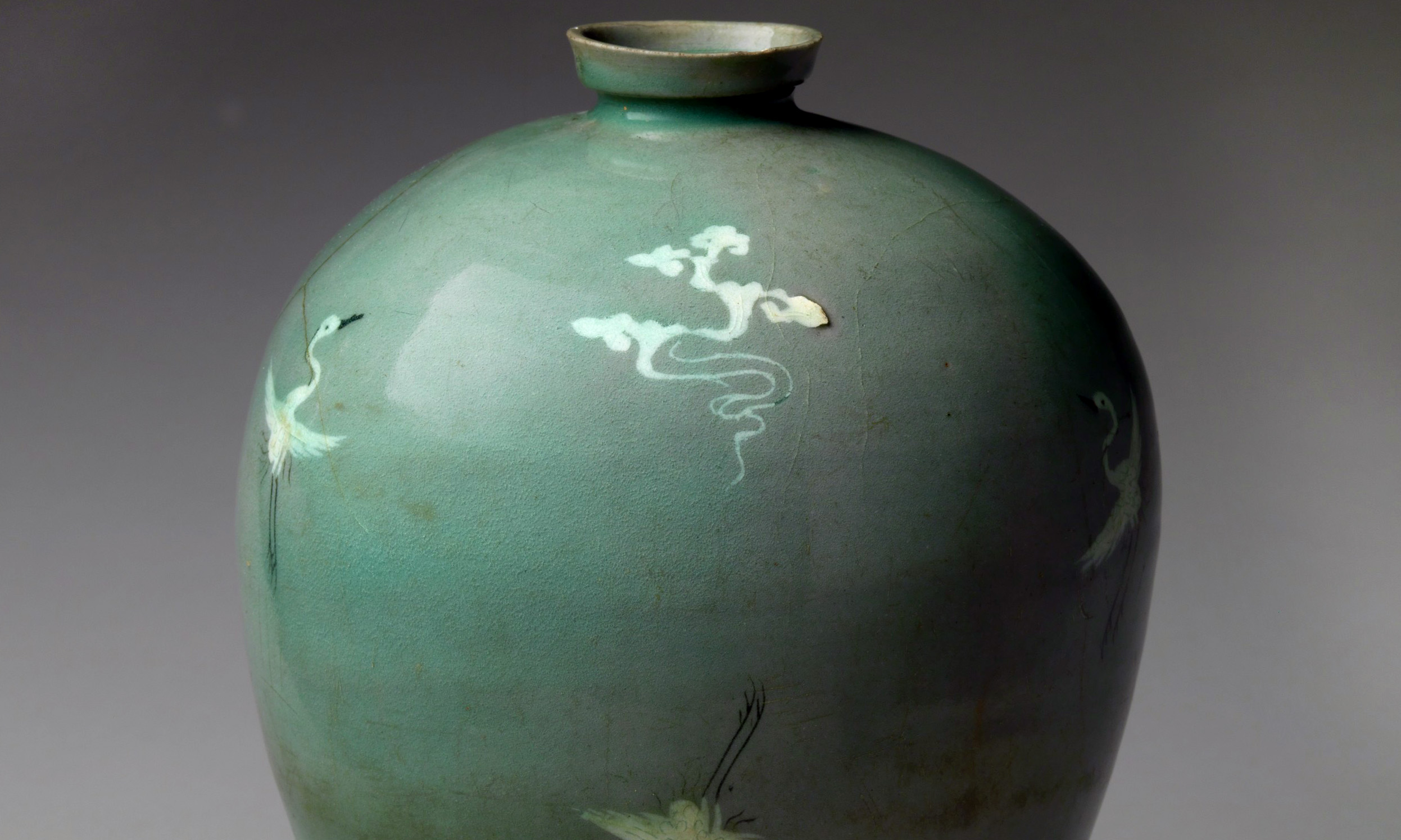
Celadons of the Goryeo Dynasty: Korean potters adjusted and refined celadon technology from China to create distinctively Korean ceramics revered by elites in Korea, China, and Nihon akin.
Read Now
/five Completed
If the arts of the Five Dynasties and X Kingdoms offered reflections on nature and morality that spoke to the political upheaval of the period, and so artists of the Vocal dynasty deepened themes of peace and unity through extraordinary innovations in the visual arts. Through awe-inspiring landscapes, intimate views of urban life, sacred sculptures, and radiant ceramics, artists re-envisioned cultural harmony for a new era.
Key questions to guide your reading
What is meant by the "iii perfections?"
Where do we see the artful of Chan Buddhism in Eastward Asian fine art?
How did Song dynasty ceramics circulate in Chinese society and throughout Asia?
Jump down to Terms to Know
hardnettspold1949.blogspot.com
Source: https://smarthistory.org/reframing-art-history/five-dynasties-ten-kingdoms-and-song-china/
0 Response to "Historical Context of Art During the Southern Song Dynasty"
Postar um comentário